What’s Happening
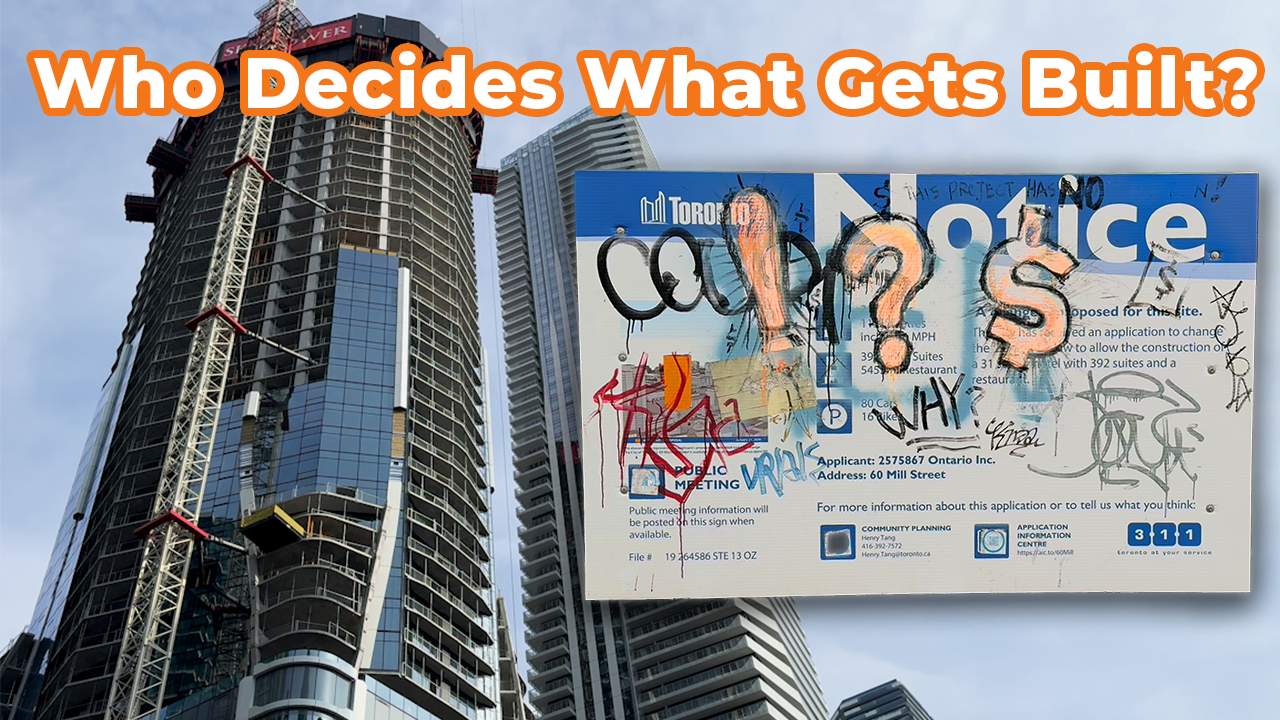
Toronto is finally building true supertall skyscrapers. Pinnacle SkyTower at One Yonge has reached 106 storeys and roughly 352 metres, making it Canada's tallest residential building. It is a massive addition to the skyline and the sort of density I generally support in the right locations. Yet I'm not impressed by the architecture.
The issue is not that I think the building is ugly. Architecture is subjective. It's that a tower this tall is going to be visible across huge parts of the city for generations, and its design feels fairly ordinary for a building of this significance. At 350 metres, a private development becomes part of the public skyline whether you live nearby or not.
A supertall is generally defined as a building at least 300 metres tall, and Toronto is entering a period when several will rise relatively close together. One Bloor West crossed that height threshold in 2025 with an expressive structural design. Concord Sky at Yonge and Gerrard is planned to exceed 300 metres. Frank Gehry's Forma project includes an eastern tower of roughly 267 metres and a planned western tower of around 308 metres, both designed with a more sculptural approach. Pinnacle's proposed third residential tower at One Yonge is also expected to reach supertall height.
For decades, First Canadian Place was Toronto's tallest conventional building, and the CN Tower stood almost alone above the skyline. That is changing. We are making decisions today that will define what Toronto looks like for the rest of this century.
SkyTower's height did not appear overnight. The site was part of the former Toronto Star lands, and the One Yonge approvals evolved over several years. A 2018 settlement established a three-tower residential plan, including a 95-storey version of SkyTower. Pinnacle later sought additional height. City Planning supported the changes, and Council approved a 105-storey version before it gained one more floor. The adjacent Prestige tower is already complete.
There is also a reasonable planning argument for substantial density here. The site sits at the foot of Yonge Street near the waterfront, with access to the downtown core and Union Station.
The broader project includes affordable rental commitments across the other phases, parkland, public art and transportation contributions, and the One Yonge Community Centre, which opened with a gym, programming spaces and a swimming pool. Those are meaningful benefits, even if the execution of some facilities has had problems.
SkyTower was designed by Hariri Pontarini Architects around the idea of a 12-sided jewel, with bevelled corners, tapering and vertical fins. There is thought behind it. I even like some detailing around the lower levels. But to my eye, the repetitive balconies, conservative glass façade and unremarkable crown do not create the kind of silhouette you would expect from a landmark of this scale.
Why It Matters
This is about more than personal taste. Architecture is experienced by everyone who sees a building. A ten-storey building mainly affects its block. A tower rising more than 350 metres changes the identity of an entire skyline, including views from the waterfront, the islands and distant parts of the GTA.
That is one reason land-use planning exists. Owning a property does not give somebody unlimited permission to build without considering shadows, wind, streets, infrastructure, transit capacity and neighbours. But the reverse question matters too. If the City can assess those measurable impacts, how much power should it have over the appearance of a privately owned tower? An architectural review can’t simply amount to a councillor or constituents deciding whether the building is attractive.
Toronto already considers important views and how major buildings relate to the CN Tower. As more supertalls rise nearby, we should think about the skyline as a whole rather than reviewing each tower as if its impact begins and ends at the property line.
The CN Tower is a useful comparison, even though it is not a residential building. Fifty years after it opened, it remains the most recognizable part of Toronto. That is the lasting visual impact a landmark can have. Future supertalls won't all need to become tourist attractions, but they should be assessed with the awareness that they are permanent parts of the public city.
The tension is finding a credible standard for better design without handing governments a vague tool to delay or block otherwise sensible housing. Architecture matters, and so do property rights, housing supply and predictable planning approvals.
My Take
I like tall buildings. Especially in areas with suitable transit, services and infrastructure. I also think Toronto should be more ambitious architecturally. Those two positions aren’t contradictory.
Pinnacle has delivered real housing and public benefits at One Yonge, and I don't dispute the basic planning case for building tall here. My criticism is narrower. For a tower this consequential, I wanted more than a fairly typical condo stretched to extraordinary height. I don't think its crown or overall shape takes full advantage of the opportunity.
At the same time, I don't want City Council designing our skyscrapers. I don't want every project delayed because a committee dislikes the colour of its glass. And I certainly don't want "design excellence" to become a new excuse for blocking housing.
There has to be a more useful conversation about long-term skyline composition, architecture and the quality of the public realm, without making approvals arbitrary. The coming generation of supertalls will change Toronto permanently. If we're going to build things everybody has to look at, I think we should try to make them worth looking at.