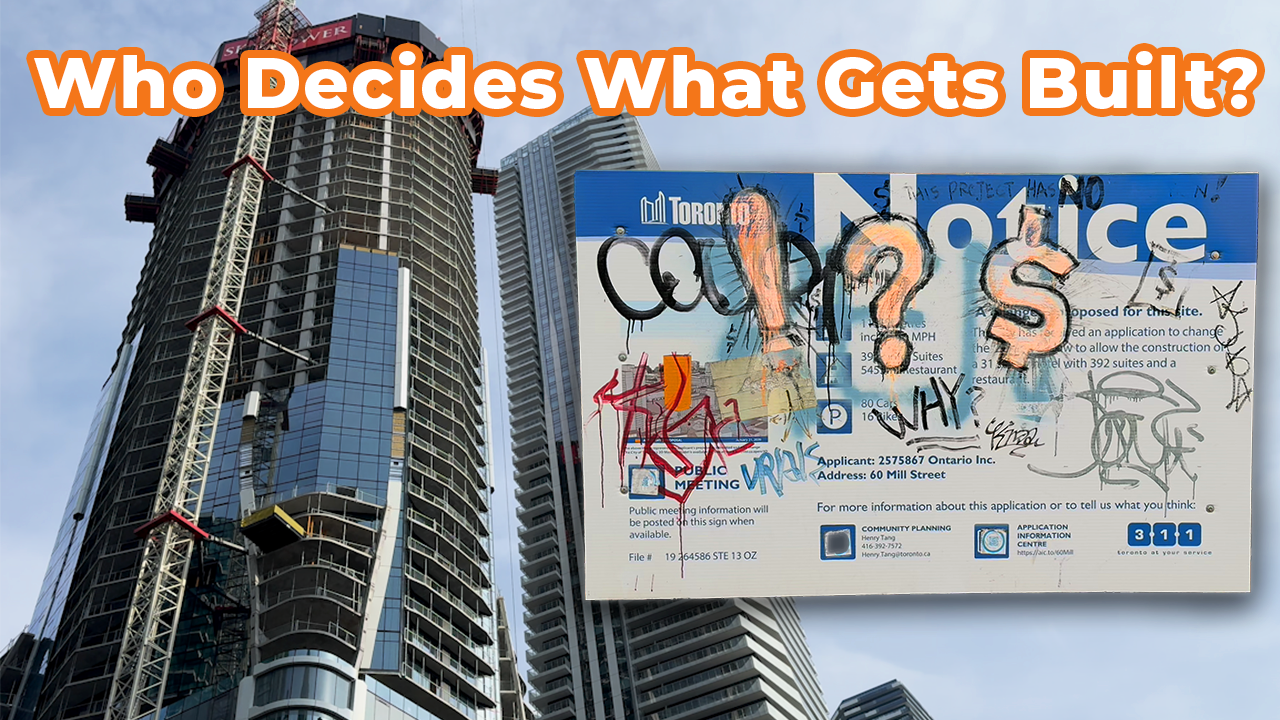
Toronto has some main streets lined with old 2-3 storey buildings that sit on major transit corridors zoned for growth, yet when they get redeveloped, we almost never see the mid-rise buildings (4-11 storeys) that would fit naturally on these sites. Instead, developers fight for super tall towers, and these fights result in decade-long battles that either end in a 50+ storey tower or an abandoned site, leaving our avenues frozen in time while all growth gets funneled into clustered high-rises. The main culprit is a little-known policy called the Community Benefits Charge that replaced Section 37 in 2022, and it's quietly making mid-rise development financially impossible. By charging developers up to 4% of land value regardless of building size, the policy punishes exactly the kind of smart, gentle density Toronto desperately needs.
In 2022, Ontario scrapped the old Section 37 system (which allowed case-by-case negotiations between developers and councillors for extra height/density) and replaced it with the Community Benefits Charge. The CBC was meant to simplify things with a flat fee of up to 4% of land value at the time of issuing a building permit. But here's the problem: that percentage is based on land value, not building size or unit count. This means whether you build 20 units or 500 units, you pay the same dollar amount. On expensive, well-located land along major avenues and transit corridors, exactly where the city wants more housing, this math destroys the viability of mid-rise projects. For example, a large lot on Gerrard near the subway would face an $800,000 CBC charge. For a 6-storey, 50-unit mid-rise building, that $800,000 CBC fee equals 14% of your total inventory just to cover the Community Benefits Charge alone. When you add in development charges (roughly $3.5 million), you need to sell 36 out of 50 units, that's 72% of the entire building, before you even start making a profit. By contrast, that same $800,000 charge spread across a 30-storey, 500-unit tower works out to just a tiny fraction per unit, making towers far more financially viable than mid-rises. So developers either walk away from these sites entirely or push for much taller buildings to spread the cost, usually on bigger lots at major intersections.
Mid-rise buildings are the missing middle that Toronto desperately needs. They're the backbone of walkable, human-scale growth that adds homes without overwhelming neighborhoods. They create complete communities with active storefronts, better streets, and no wind tunnels or shadow canyons. They're also cheaper to build than high-rises (no deep excavation or complex elevator cores), which means lower construction costs and more opportunities for smaller developers. Yet our avenues (Queen, College, Danforth, sections of Yonge, Bloor) sit frozen with run-down 2-3 storey buildings while buyers are being priced out to Hamilton or Barrie. Look at St. Clair west of Avenue Road: mid-rise after mid-rise, consistent density that works and blends into the street. The Danforth, College, and Queen could be like that, but they're not. The CBC policy is designed in a way that discourages building on high-value land, which is the land near transit, shops, and jobs where the city claims it wants more housing. Without serious changes, mid-rise condos aren't just dying in Toronto. They're already dead.
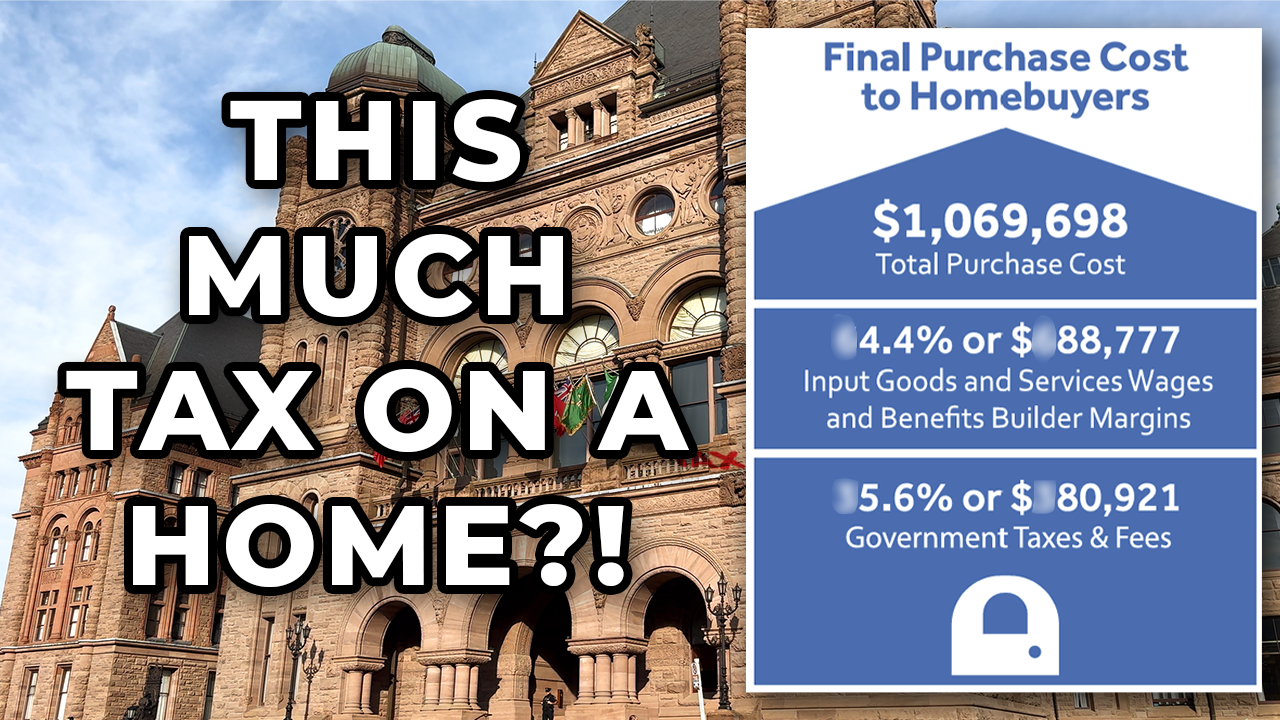
We're taxing housing like it's a bad habit. The Community Benefits Charge made sense in theory: simplify the backroom Section 37 deals, make things predictable and transparent. But the execution is broken. Charging a flat percentage of land value regardless of project size punishes the exact developments that create the most livable, walkable, transit-friendly growth. A 6-storey building on Gerrard near the subway should be a no-brainer, but the math doesn't work when 72% of your units just cover charges before you see a dollar of profit. So what happens? Developers walk away or push for towers, and our avenues stay stuck in the 1970s while growth gets funneled into a handful of 50-storey clusters that stick out like sore thumbs. The fixes aren't complicated. Scale the CBC based on project size, not just land value. Add exemptions or rebates for mid-rise projects along avenues or near transit. Bundle approvals and incentives for gentle-density forms like mid-rises, triplexes, and laneway suites. The city says it wants growth on avenues, so let's actually make them viable to build on.