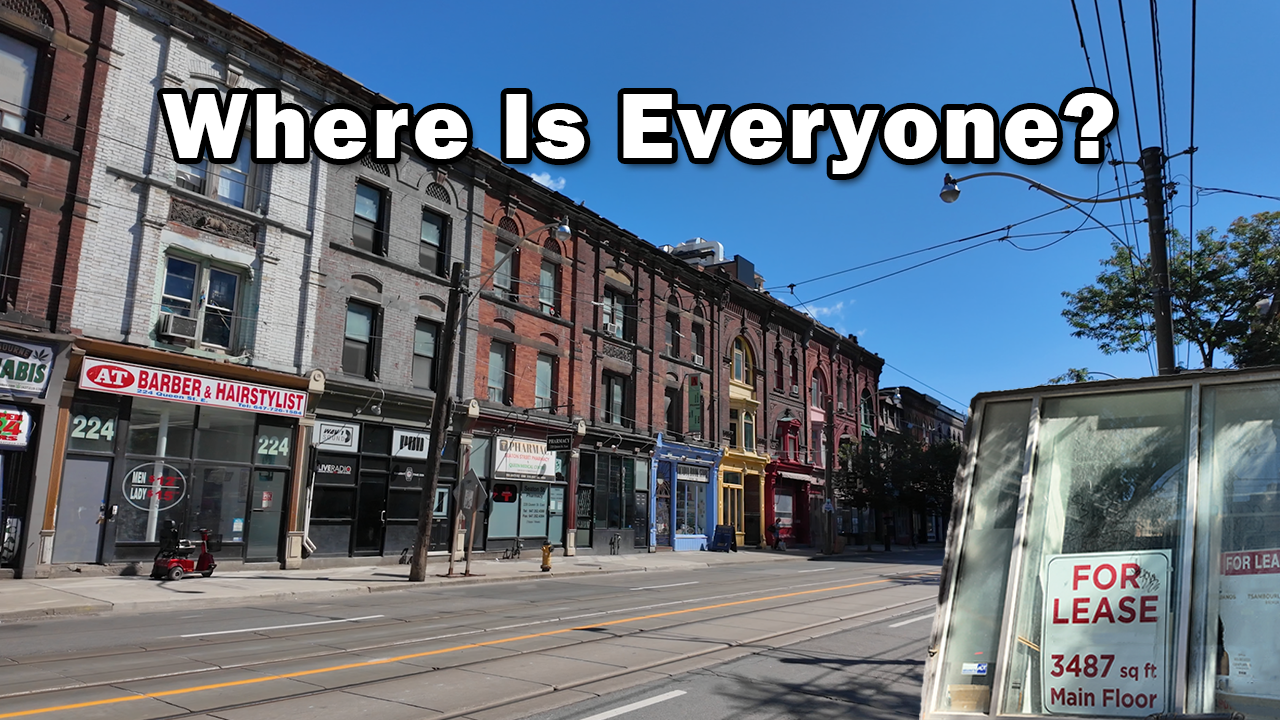
Toronto's most iconic neighborhood is changing fast. Longstanding businesses are closing, beloved events are disappearing, and the vibe just feels different. From the loss of greengrocers and fishmongers to the pause of Pedestrian Sundays, Kensington Market is caught between preservation and transformation. Is Kensington losing what made it special in the first place?
Kensington Market has always been Toronto's most organically diverse neighborhood. It’s a National Historic Site built on waves of immigration and packed with independent shops, greengrocers, and street life. But recent closures tell a different story. Hooked, a fishmonger that survived 13 years, just shut down. Six greengrocers operating in 2016 are now down to one. Fresh food vendors are being replaced by dispensaries, bars, and tourist-oriented businesses that don't serve the everyday needs of residents.
At the same time, Pedestrian Sundays, the monthly car-free street festival that brought thousands to the neighborhood, was paused for a period in 2025. The Kensington BIA cited unpermitted vendors and enforcement challenges, but without it, the area lost a major community anchor. Add in concerns about public safety near the Overdose Prevention Site, and you've got a neighborhood where longtime residents and business owners are questioning whether it still works for them.
Kensington Market isn't just another neighborhood, it's one of the few places in Toronto where you can still walk to buy all your everyday essentials, support independent businesses, and feel connected to a real street-level community. When neighborhoods like this change, they don't get replaced. Current zoning and planning laws make it nearly impossible to build new mixed-use, pedestrian-first areas with this kind of density and diversity.
The shift from greengrocers to dispensaries isn't just about retail mix—it's about livability. When a neighborhood stops serving the people who live there, it becomes less desirable as an actual place to live and more of a destination for nightlife and tourism. That changes who moves in, what gets built, and ultimately, the character of an entire part of the city. If we lose Kensington's model, we're not getting it back.
Here's the thing people get wrong about gentrification: it's not just about rich people moving in. It's about neighborhoods stopping to serve the people who actually live there. Kensington Market is a perfect example. You've got residents who want to buy groceries, walk their street safely, and be part of a real community, but instead they're watching their greengrocers turn into dispensaries and their monthly street festival disappear.
Some people will say Hooked closing is no big deal that it was overpriced, that specialty shops accelerate gentrification. Maybe. But when even the higher-end independent retailers can't survive, what's left? Bars, dispensaries, and Instagram-friendly spots that look good but don't actually serve daily life.
The broader issue is that we're not building neighborhoods like this anymore. So when we lose them to turnover, rising rents, and policy inaction, we're losing something we can't replace. Kensington has a Community Land Trust trying to preserve affordable housing, and it's designated as a Heritage Conservation District, but that's not enough if the street-level retail and daily life infrastructure keeps disappearing.
As a realtor, I see how this affects desirability. Some buyers love the energy and nightlife. Others, especially people who want walkable, functional neighborhoods, are starting to look elsewhere. But every neighborhood changes over time, and who it serves changes too. Neighborhoods work best when they serve the people who actually live in them, when you can walk outside, get your groceries, support local shops, and see yourself in the street life around you. So to answer the question: "What is happening to Kensington Market?" It's changing. And depending on who you are, that change might feel exciting or heartbreaking.