What’s Happening
Toronto's pre-construction condo market has barely had a pulse. In 2025, new condo sales across the Greater Toronto and Hamilton Area fell to their lowest annual level since 1991. In the first quarter of 2026, just 246 new condos sold across the entire region, and for the first time in more than 30 years, there were no new condo project launches that quarter. Construction starts were down 88 percent over three years. Those figures help explain why so many developers have delayed launches, cancelled projects or switched from ownership housing to rentals.
That's what makes Forêt Forest Hill at Bathurst and St. Clair interesting. The three-tower, master-planned development has more than 1,300 planned homes, along with a public park, childcare, retail, community space and a substantial amenity package. Despite the market, the project broke ground. Its first tower reportedly pre-sold approximately 70 percent of its units, allowing the developer to obtain construction financing from a group of five major Canadian banks.
The difficulty for most projects is the pre-construction financing model. Before a developer can obtain a conventional construction loan, lenders generally want something like 70 to 80 percent of the units under contract. Buyers therefore have to commit years before the building is ready. For a long time, investors were willing to take that risk because interest rates were low, condo values were rising and smaller units seemed like an easy way into the market. Developers responded with more compact one-bedroom units, awkward dens and layouts designed around a relatively low total purchase price rather than long-term livability.
That buyer has largely stepped back. Higher borrowing and carrying costs, lower-priced competing resale condos and greater awareness of the risks have made presales harder. It's not only the obvious investor-oriented projects struggling. As discussed in the video, 6080 Yonge and the luxury project at 138 Yorkville illustrate how even credible developers and more expensive products have faced a difficult sales environment.
I think Forêt has several advantages. First is its setting. Bathurst and St. Clair is an established neighbourhood with the St. Clair streetcar, nearby St. Clair West subway station, and access to Forest Hill, Cedarvale, Wychwood and Casa Loma. Buyers aren't being asked to imagine an entirely new community. They can see the parks, schools, shops, transit and surrounding homes already there.
Second is the buyer pool. The project can appeal to local downsizers, parents helping adult children purchase, end users who want to live in midtown, and some investors. It isn't dependent on one type of purchaser who is primarily chasing appreciation.
Third is the housing itself. The average suite is about 630 square feet, with the largest reaching approximately 2,000 square feet. Roughly 13 percent are studios, 13 percent one-bedrooms, 41 percent one-bedroom-plus-den units, 25 percent two-bedroom, two-bathroom units and seven percent three-bedrooms. Not every suite is spacious, but the range is broader than the typical investor-focused tower. The sales team estimated that about 70 to 80 percent of the homes are not micro-units.
There is also the HST rebate discussion. It can reduce the price gap between new construction and resale, but it can’t make an awkward layout desirable. In May, new GTA condo apartment sales were still only 193 units, about 89 percent below the 10-year average. Forêt reported that April through June were its strongest sales months, approximately 50 percent above the winter period after the expanded rebate was announced. That timing is interesting, but it doesn’t prove the rebate caused those sales.
Why It Matters
Forêt doesn't prove that buyers have returned to pre-construction in general. It shows why a project still needs a reason for people to commit several years before receiving the keys. Location, a real neighbourhood, useful unit layouts and a broad range of purchasers all matter when investors are no longer carrying the pre-con market.
It also exposes a weakness in how much Toronto has relied on a particular kind of condo. Developers became accustomed to selling small units to investors, and that demand helped finance a huge amount of the skyline. But the product followed the buyer. Once investors retreated, end users did not simply arrive in equal numbers to purchase those same tiny units at new-construction prices.
As a realtor, I see this with people who are thinking about starting families. A two or three-bedroom label isn’t enough if the apartment is cramped, the bedrooms don't work or a column makes the main living space awkward. In a market where buyers have more choice, they don't have to settle for bad layouts.
There is also a supply risk beyond today's slowdown. A new condo building that doesn't secure financing now won't be delivering homes in 2030 and beyond. Falling presales are leading to project cancellations and conversions to rentals which could leave the city with fewer ownership options down the road.
My Take
I don't see Forêt as proof that Toronto condos are saved. The numbers across the wider market are too weak for that. What I see is a project that did enough things right to move forward when most others couldn't, and I think the rest of the industry should pay attention.
The old model was built around selling risk to investors. Developers could put out smaller and smaller homes, investors would buy them years before completion, and the presales would unlock construction financing. Now that those investors have stepped back, it isn't reasonable to assume end users will replace them while the product stays exactly the same.
I work with buyers who want to stay in Toronto, including people who plan to start families. They are rejecting the poorly laid-out two and three-bedroom condos. That’s not the consumer being unreasonable. It's the consumer telling the industry what they actually want.
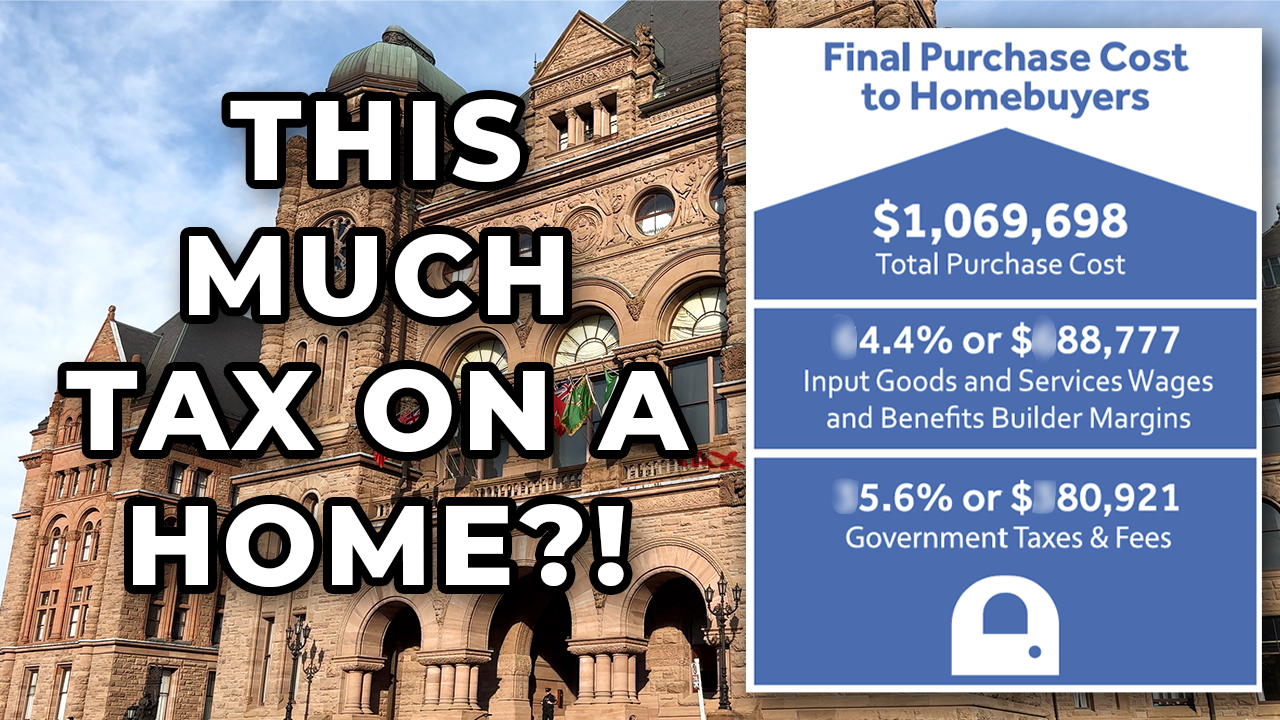
I agree that development charges are expensive, construction financing is difficult and approvals can take too long. I advocate for changes to those problems. But developers can't blame every stalled project on rates, taxes or government policy while continuing to propose homes that buyers don't want to live in.
Forêt isn't perfect, and its unit mix still includes plenty of smaller apartments. But it shows that the market hasn't disappeared completely. Buyers may still commit to new housing when the location is established, the product is useful and the project can serve more than one type of household.
The question now is whether developers adapt, or whether they keep waiting for investors or government incentives to rescue the same old model. I'd much rather see the next cycle of Toronto condos built around selling proper homes to the people who plan to live in them.