Another major GTA developer is facing financial collapse. Vandyk Properties owes over $203 million and has five developments, totaling 1,757 unbuilt homes, being pushed into receivership by lenders. Nearly half of those units have already been sold to buyers who've put down tens to hundreds of thousands in deposits and are now stuck waiting to see what happens next. This comes just months after The One and Artscape went into receivership, raising serious questions about how many more developers will follow.
Vandyk Properties, founded by Jon Vandyk in 1979, built its reputation on single-family detached and semi-detached neighborhood projects. But they recently expanded into high-rise condos and took on substantial debt to do it. Between spiking construction costs, rising labor expenses, development fees, and high interest rates, Vandyk couldn't keep up. Now they owe over $203 million, with $267 million in mortgages and liens registered against their properties.
Five projects are facing receivership:
Uptowns Phase 1 in Brampton: 340 townhouse units, 329 already sold. Launched in 2017 with an expected completion date of December 2020. The pandemic caused initial delays, but unlike other developers who recovered, Vandyk never caught up. Subcontractors have sued for unpaid work, and the Outside Occupancy Date was set for May 2023, meaning buyers have been waiting over five years.
Uptowns Phase 2 in Brampton: 200 townhouse units on adjacent land, sales started last year, 100 units sold. Construction hasn't started.
The Ravine in Mississauga: 39 semi-detached homes on Waterhouse Crescent backing onto a ravine, priced starting at $1.8 million. Only six units sold so far, no completion date set.
Lakeview DXE Club (Lakeshore & Dixie): Two boutique-style condos on the border of Etobicoke and Mississauga, 396 units, nearly all sold. Sales started 2022.
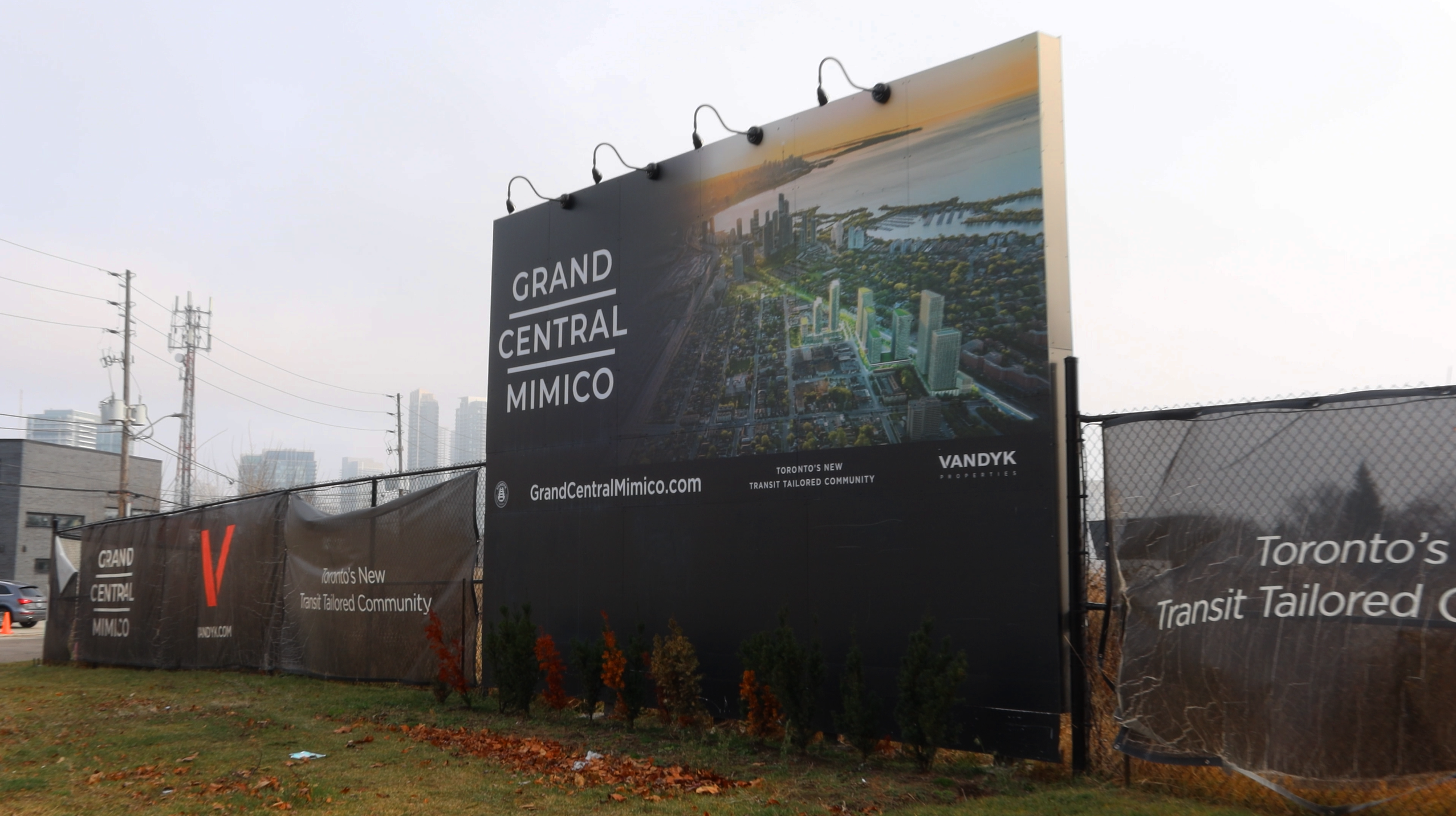
Grand Central Mimico (Royal York & Gardiner): A massive project with towers built over four blocks near the GO station, developed in partnership with Metrolinx. The current phase includes two towers with over 700 units that sold out quickly in spring 2021 due to location and hype.
Vandyk has stopped paying contractors, subcontractors, and even their main architect. Lenders are now pushing for receivership, a court-appointed process where a receiver takes over the projects, manages them, and tries to pay back debts while protecting buyers' interests.
Buyers who put down $50,000 to $200,000 in deposits, some as far back as 2017, are now stuck in financial limbo. That's a massive amount of money sitting idle for years with no certainty about when, or if, they'll get their homes. And while condo buyers have some protection through Tarion (up to $20,000) and developer deposit insurance required under the Condominium Act, accessing those funds can take years. Townhouse buyers at projects like Uptowns don't have the same level of protection.
The fine print in these contracts allows developers to delay occupancy far beyond initial promises. The Outside Occupancy Date, often around ten years after sales launch, is the only enforceable deadline. Developers can even extend that date with notices. Most buyers don't understand this when they sign, which is how you end up with people who thought they'd move in by 2020 still waiting in 2025.
This isn't just about Vandyk. In the past four months alone, we've seen three high-profile receiverships: Vandyk, Artscape by Daniels, and The One by Mizrahi Developments. These are symptoms of broader market pressure: rising interest rates, increased construction costs, supply chain disruptions, and a cooling market where buyers are walking away from pre-construction deals. Many buyers are forfeiting hundreds of thousands in deposits rather than close on units they can no longer afford at current mortgage rates. That cash flow disruption, combined with fewer new pre-construction sales, is strangling developers who rely on those funds to complete projects.
This is what happens when developers overextend themselves chasing growth they can't afford. Vandyk spent decades building a solid reputation on single-family and semi-detached projects. Then they expanded into high-rise condos, took on massive debt, and couldn't handle the financial reality when costs spiked and interest rates climbed. Now they owe over $200 million, their contractors aren't getting paid, and over 1,700 buyers are stuck in limbo.
Let's talk about the buyers. If you put down $100,000 in 2017 expecting to move into Uptowns by 2020, and you're still waiting in 2025, that's five years of your life on hold. Five years where that money could have been invested, used as a down payment on another property, or put toward rent. Instead, it's sitting in a trust account (if you're lucky and bought a condo) or tied up in a stalled project with no clear resolution.
And here's the thing people don't understand about pre-construction: you are not protected the way you think you are. Yes, condo buyers have deposit insurance and Tarion coverage. But Tarion only covers up to $20,000, and most deposits are ten times that. Developer deposit insurance exists, but accessing it can take years, especially in receivership. Townhouse buyers? Even less protection. You're relying entirely on the developer's financial stability, and clearly, that's not a safe bet right now.
The fine print in these contracts is designed to protect developers, not buyers. Outside Occupancy Dates can be ten years out, and developers can extend them with notice. Most buyers don't read that far into the agreement, they're focused on the initial promised completion date, which is almost never enforceable. So when a developer like Vandyk says your unit will be ready in 2020 but the Outside Occupancy Date is 2023, and then they push it to 2025 or beyond, you have very little recourse.
Grand Central Mimico is particularly frustrating. That project sold out quickly in 2021 because of the location and the Metrolinx partnership. Buyers trusted that a project backed by a government transit agency would be safe. But now it's facing receivership just like the rest of Vandyk's portfolio.
The broader market impact is real. Fewer pre-construction sales mean less funding for new projects. Stalled developments mean fewer homes being built, which worsens the housing shortage. And every receivership erodes buyer confidence in pre-construction, making it even harder for legitimate developers to sell units and finance their projects.
Here's my advice: if you're thinking about buying pre-construction, do your homework. Research the developer's financial health and track record. Read the entire agreement of purchase and sale, especially the sections on occupancy dates and deposit protection. Understand that the initial completion date is aspirational, not binding. And if you're already locked into a stalled project, consult a real estate lawyer to understand your rights and options.
The current market is unforgiving, and we're likely to see more developers follow Vandyk's path.