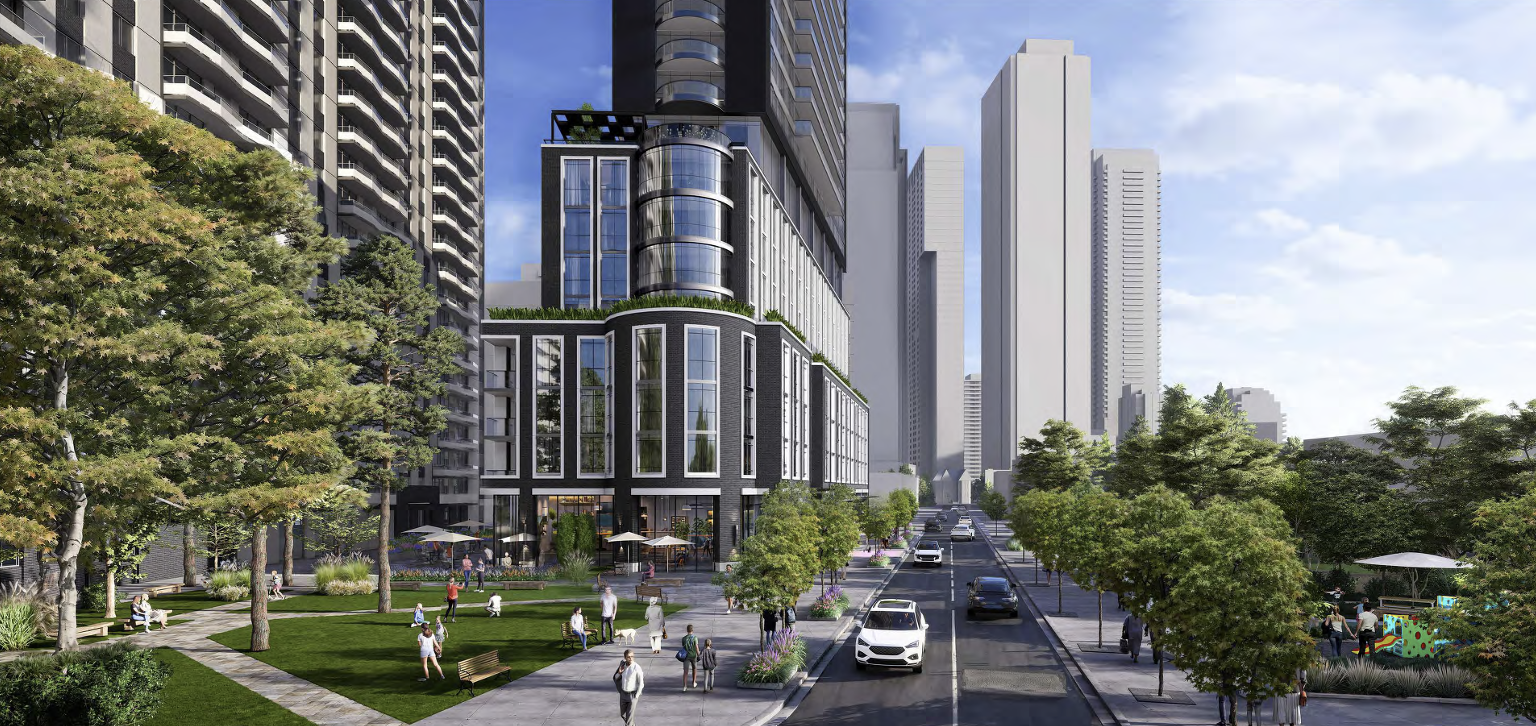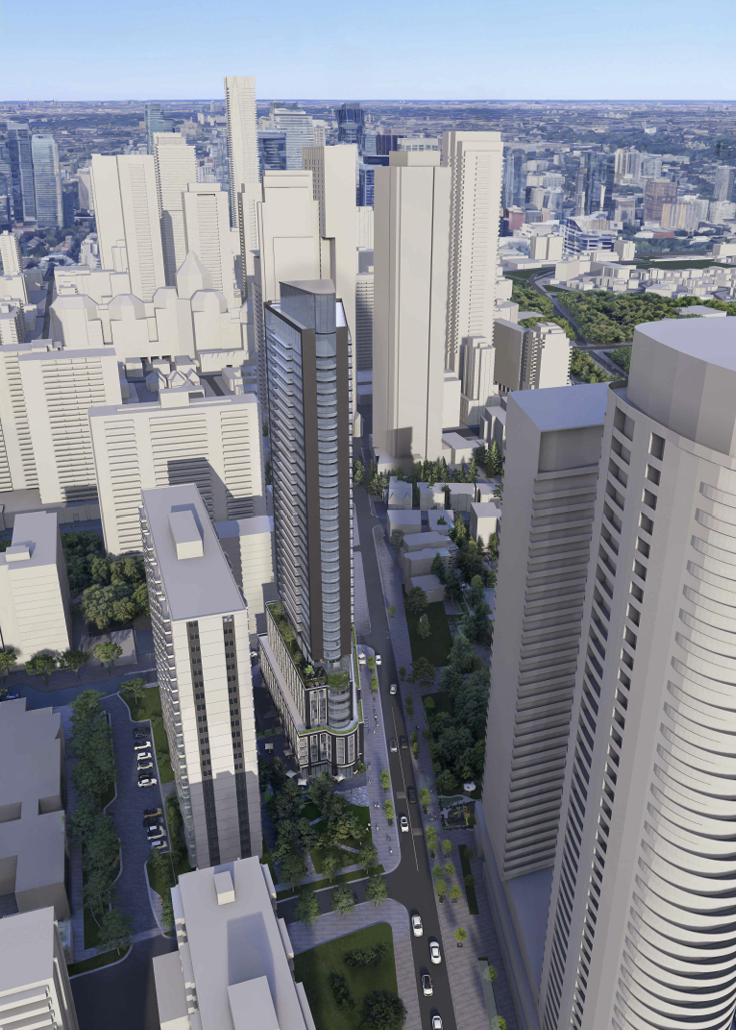
A 38-storey tower proposed on the same site as the existing 77 Howard rental building in St. James Town, already North America's densest neighbourhood, would replace green space with a 'public park.'
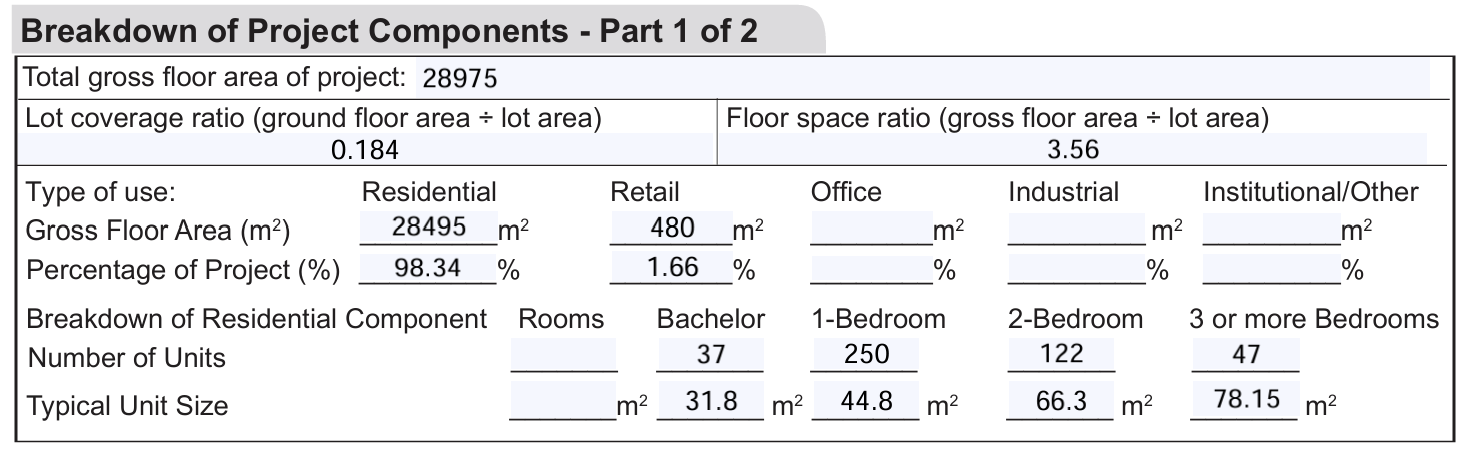
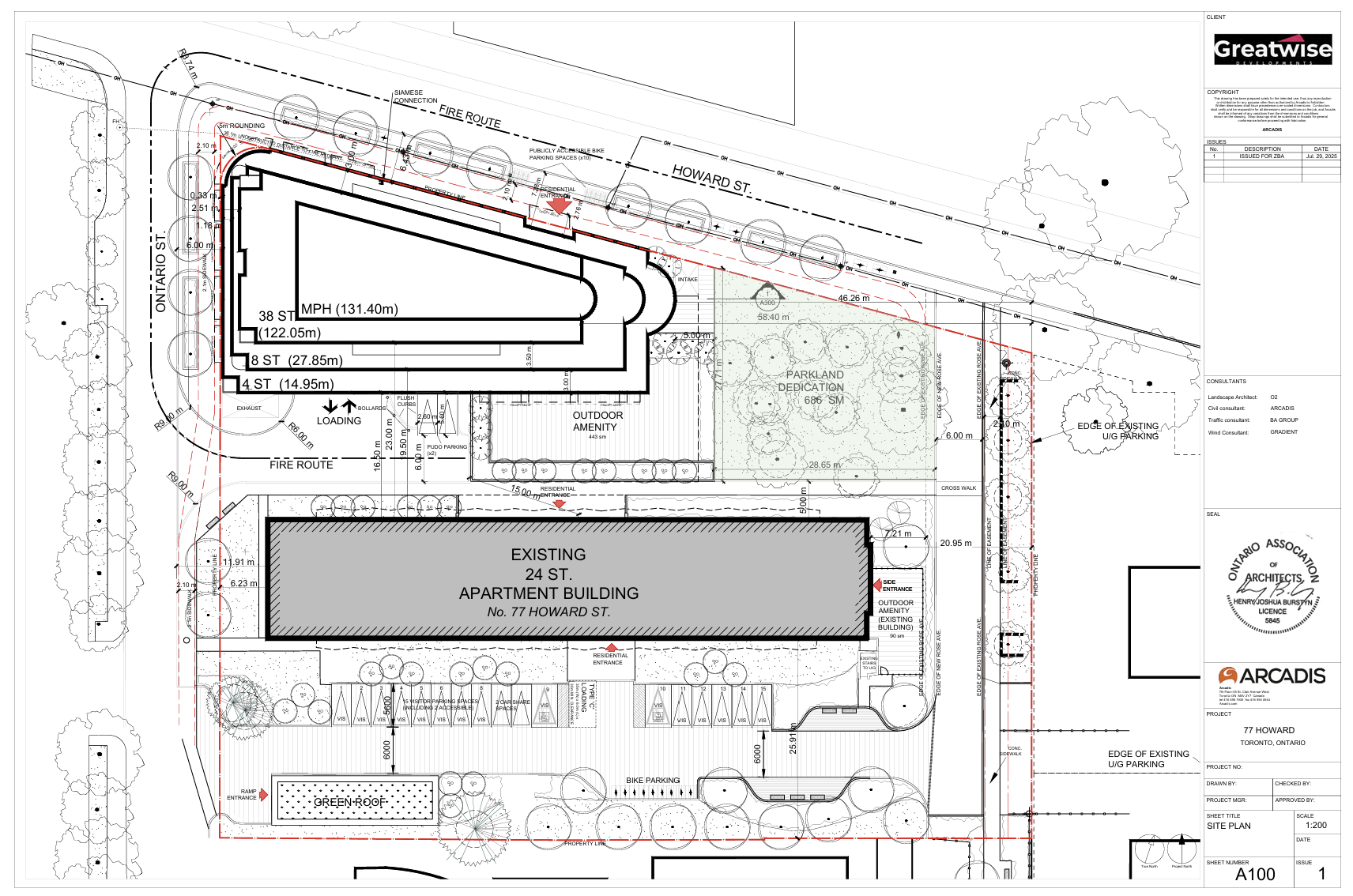
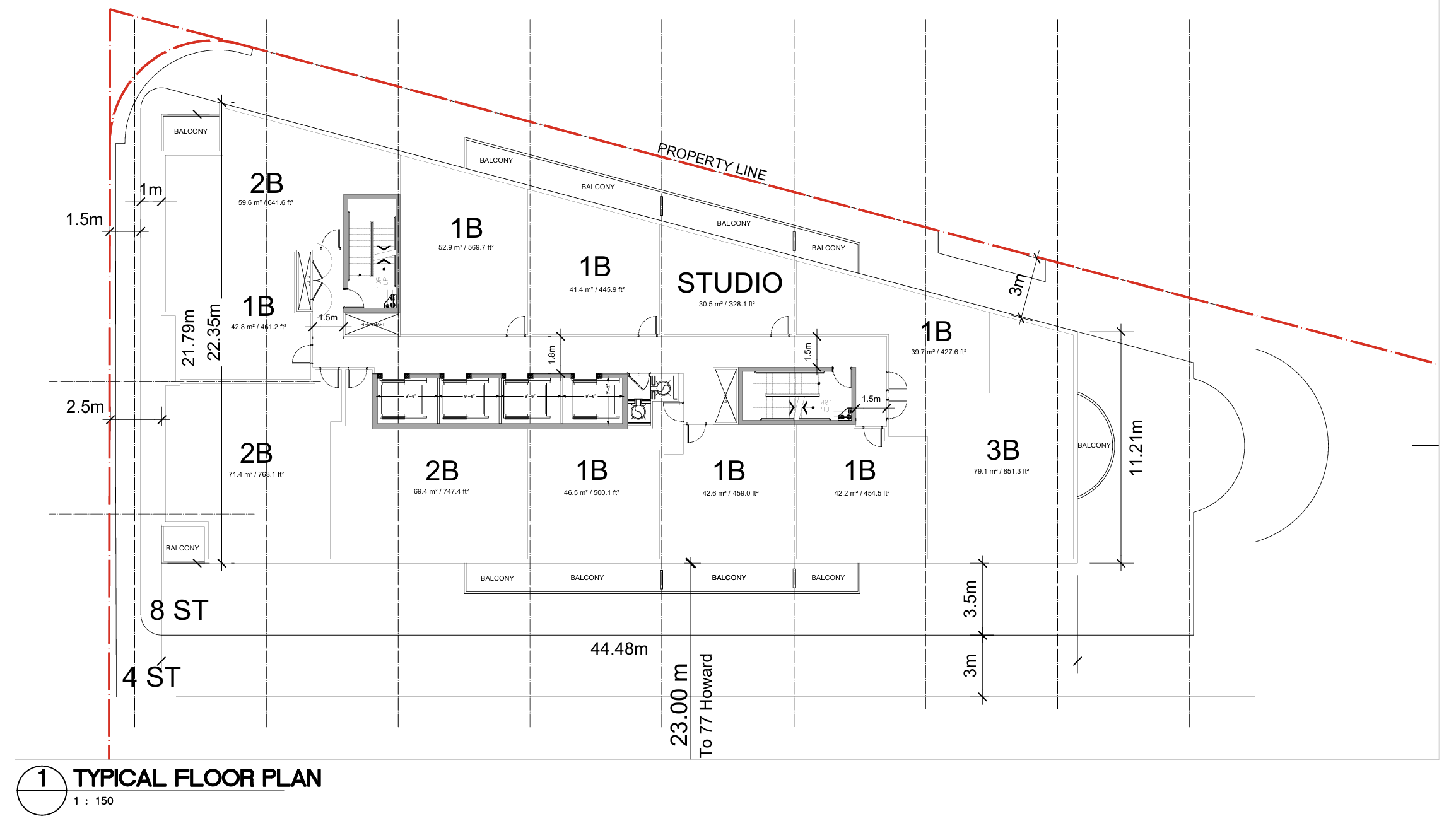
The proposal calls for a 38-storey residential building at 77 Howard Street, located on the same site as an existing 24-storey rental apartment building which would be maintained. The new tower would contain 456 dwelling units, 480 m² of non-residential space on the ground floor, 66 car parking spaces, and 513 bicycle parking spaces. The project includes a *686 m² public park, converting existing green space on the site. The developer is Greatwise Developments with Arcadis as the architect. The site is in St. James Town, Toronto's densest and lowest-income neighbourhood. The proposal shows a building separation distance of 23 metres from the existing rental tower, compared to the 25-metre guideline outlined in the City's Tall Buildings Design Guidelines.
This proposal highlights everything broken about how Toronto builds density in already-dense neighbourhoods. St. James Town is North America's most densely populated community, it doesn't need more towers, it needs infrastructure investment, community services, and actual green space.
The developer is framing the replacement of existing green space with a "public park" as a benefit, which is absurd. That green space also plays a key role in currently serving as a fire muster point for residents in a neighbourhood with frequent e-bike and electrical fires in aging buildings.
The community consultation was a disaster, with the architect calling the neighbourhood "unsafe" and the frontage "ugly," then refusing to apologize when residents demanded one. Councillor Moise admitted he opposed the project when first approached but kept repeating that his hands are tied by the Planning Act and Bill 60. While that's partly true, he could be pointing planners toward the Equitable Development Guidelines and Community Services and Facilities Strategies; tools specifically designed for underserved areas like this.
The residents are rightfully angry, but their concerns are getting lost in the chaos because there's zero community education by the city on how to navigate these processes effectively. This development should also be scrutinized hard on building separation distances (23m vs. the 25m guideline), infrastructure capacity, and whether cramming more people into Toronto's most underserved neighbourhood without corresponding investment aligns with any definition of equitable development.