Two super-tall towers proposed for a triangular Corktown site with unprecedented density (FSI 37-38). The proposal includes 1,284 units, minimal parking, and relies on a future Ontario Line station. The community consultation had no presentation and no way to submit feedback.
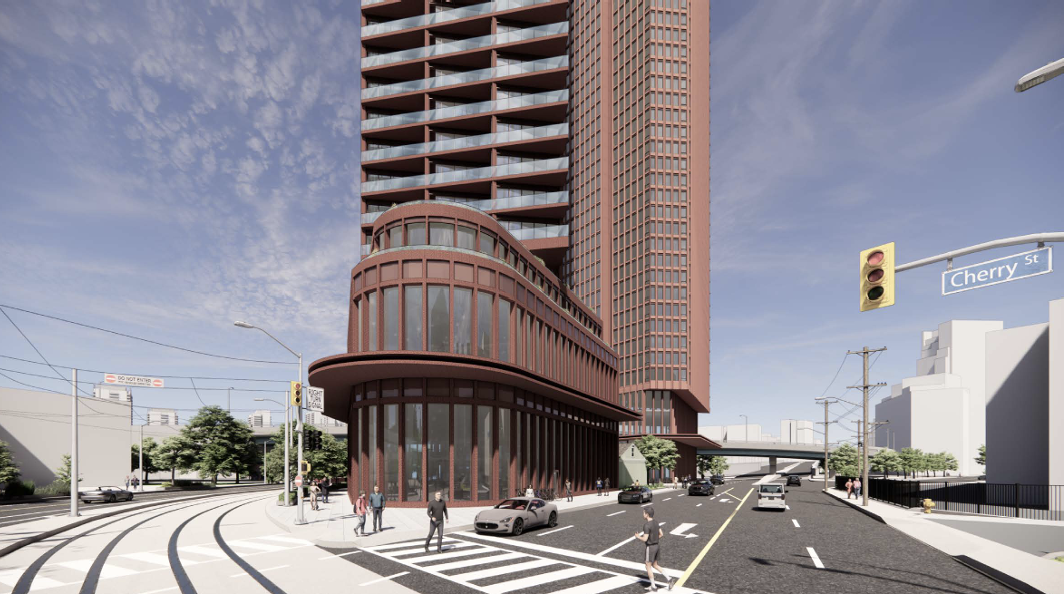
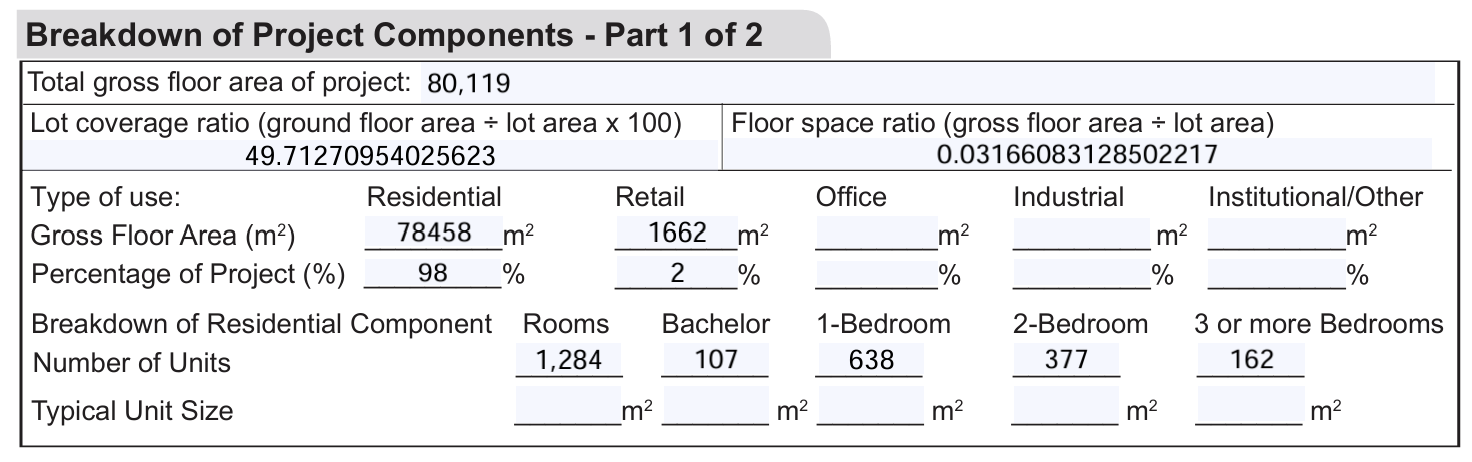
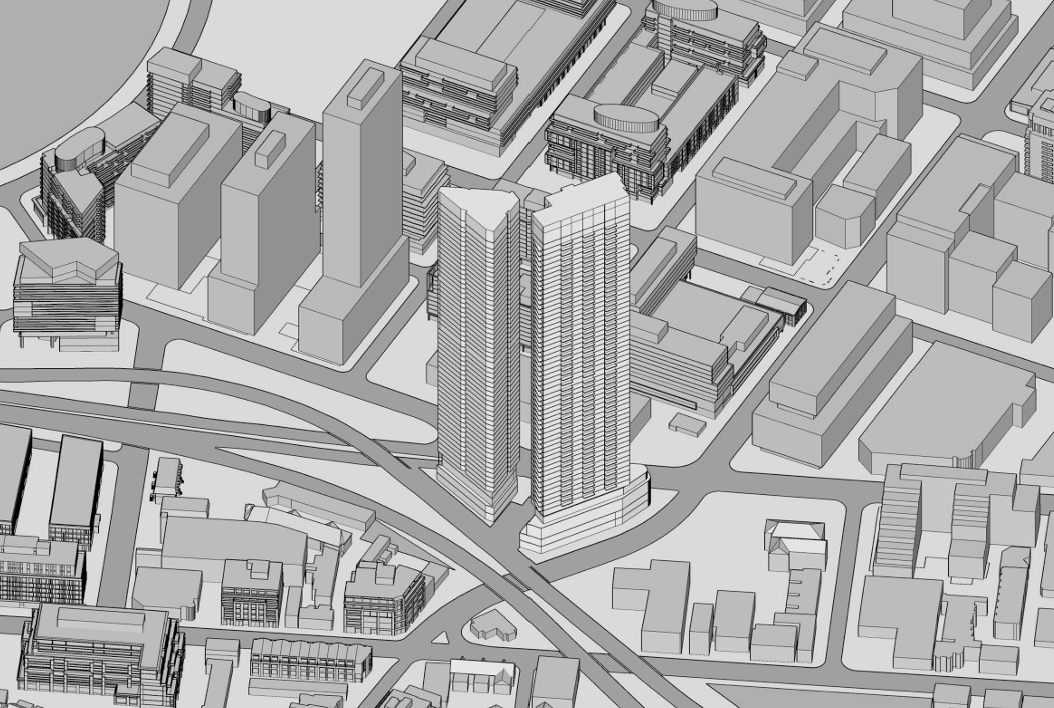
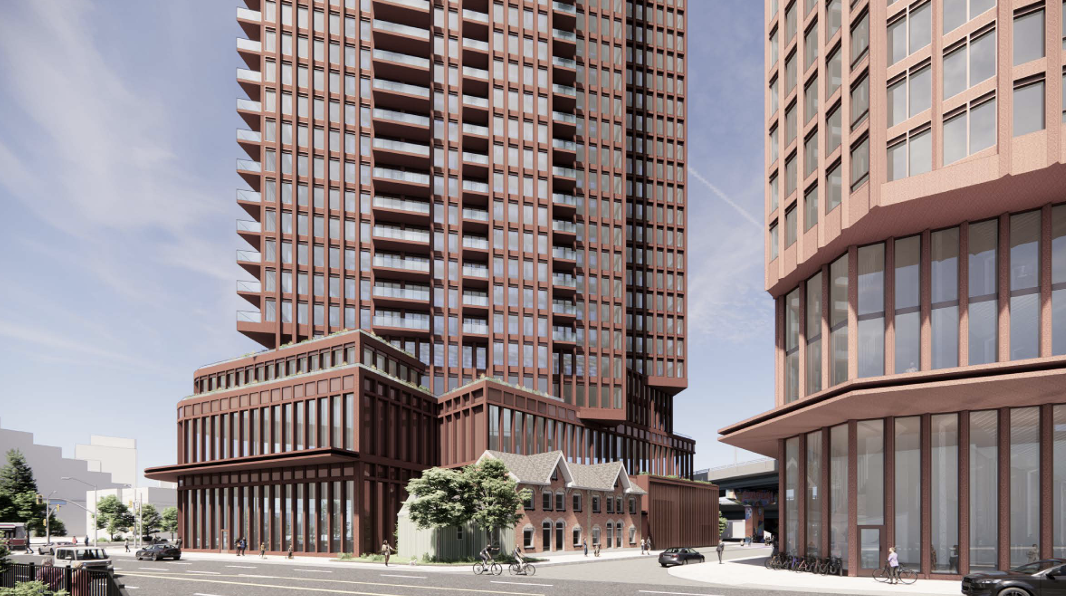
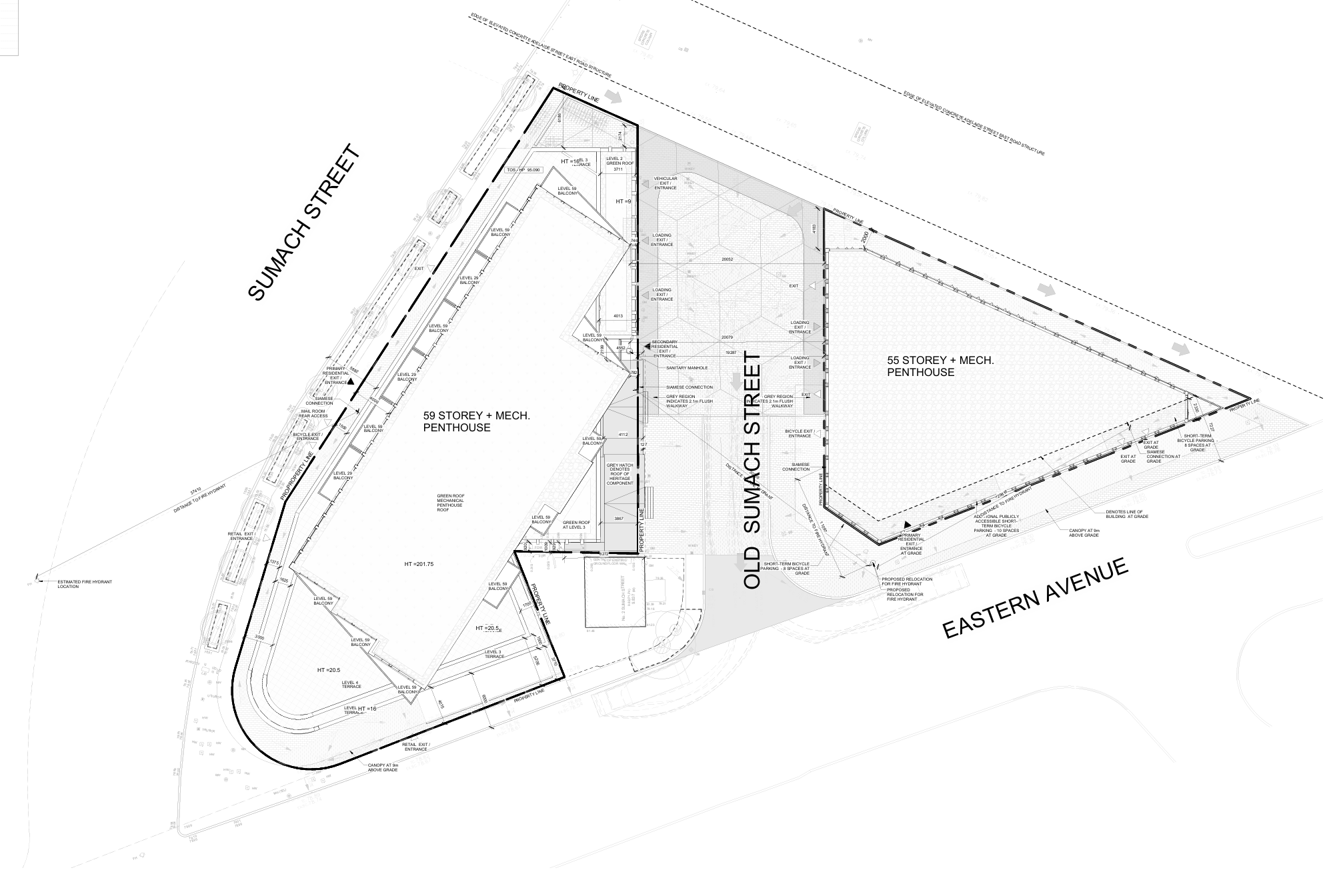
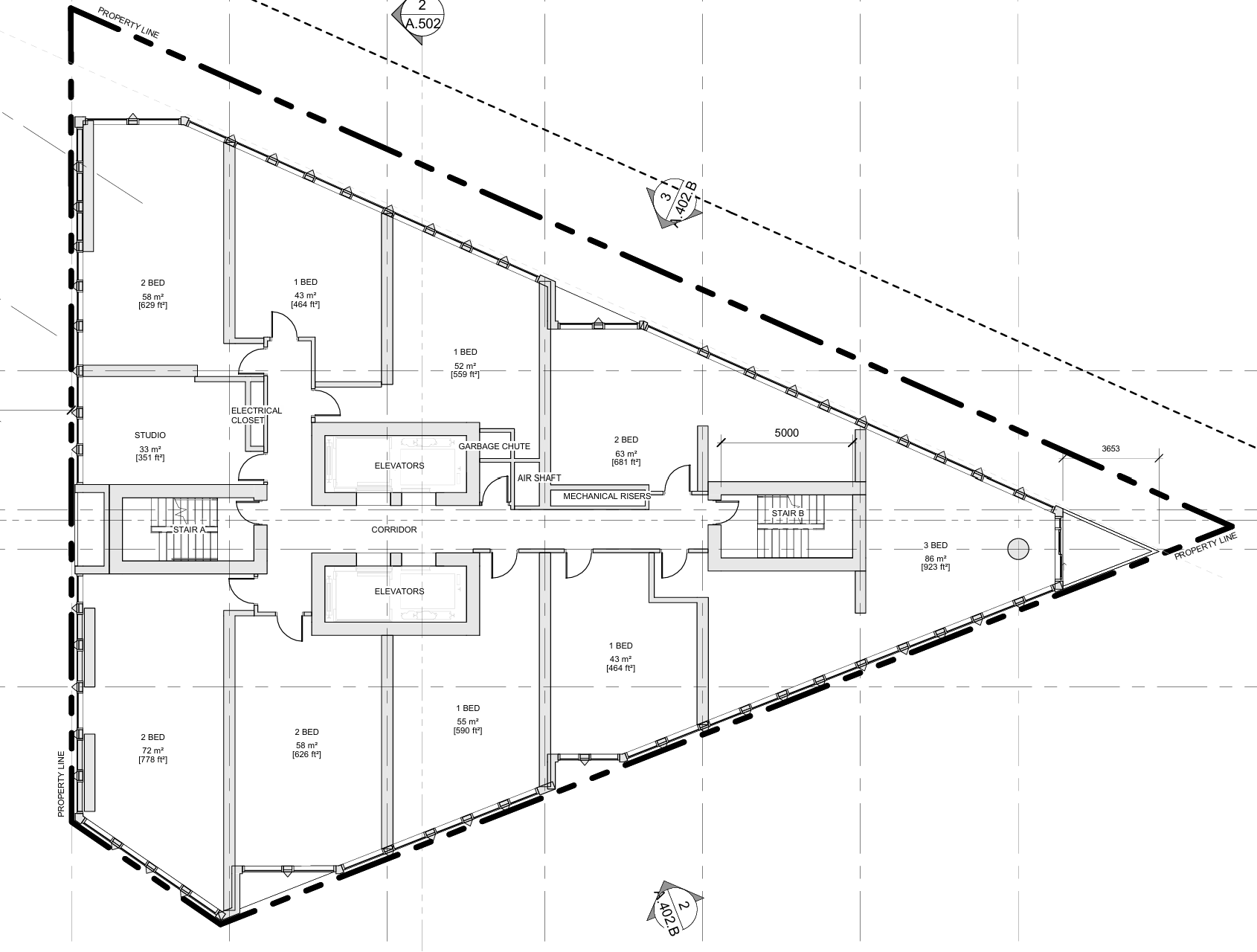
The proposal calls for two residential towers on a triangular site at 1-16 Sumach Street and 90 Eastern Avenue in Corktown. The west tower would be 59 storeys, and the east tower (with a distinctive triangular flatiron shape) would be 55 storeys, with a combined 1,284 residential units and approximately 13,000 square feet of retail space. The proposal includes a fully automated parking system with 240 spaces and 1,416 bicycle parking spaces. Tower separation is approximately 21 meters, below the city’s 25-meter guideline. Four heritage row houses at 6-12 Sumach will be relocated 9-10 meters south and integrated into the west tower; the Cube building at 1 Sumach will be demolished. The combined density is approximately 37-38 FSI, with Block A at 32.5 FSI and Block B at an extraordinary 50.0 FSI. For context, typical downtown Toronto projects range from 10-15 FSI, and even major master-planned developments like The Well were approved at 9.5 FSI. The site's triangular geometry severely constrains the ability to meet Tall Building Design Guidelines for tower separation, floorplate size, sky-view factor, and wind performance. The unit mix includes a high proportion of one-bedroom units and some awkwardly shaped triangular three-bedroom units at approximately 923 square feet. Transit access currently relies on the 504 King and 501 Queen streetcars, both of which are near crush capacity during peak hours. The proposal's transportation study assumes high ridership from the future Ontario Line Corktown Station, located 550 metres away, which is not expected to be operational until the early 2030s. Sidewalk widths are 2.1 metres on Eastern Avenue and 1.8 metres on Old Sumach Street, both below the City's preferred 3.0-metre clearway standard for mixed-use corridors. The proposal includes no affordable housing commitment and no major public realm contribution such as widened sidewalks, public space, or mid-block connections.
This proposal is extreme density on a site that can't handle it. An FSI of 37-38 is unprecedented in Toronto for a site this small and this constrained. The triangular geometry of the parcel fundamentally limits the ability to design two super-tall towers that meet basic tall building guidelines. You can't achieve proper tower separation, reasonable floorplates, or acceptable wind performance when you're cramming this much density onto a wedge-shaped lot.
The transportation assumptions are irresponsible. The 504 King streetcar is already at crush capacity during peak hours and weekends. The 501 Queen is nearby but indirect for many trips. The proposal assumes that 2,500 new residents will rely heavily on transit, but there's no interim mitigation strategy and no acknowledgment that the Ontario Line Corktown Station won't be operational until the early 2030s, if timelines hold. Even when the Ontario Line opens, it may not absorb the cumulative density planned for the East End by that time.
The parking provision of 240 spaces for 1,284 units (0.19 spaces per unit) is being justified by the future Ontario Line. This is a planning fantasy. People will still own cars, and those cars will be parked on the streets in the neighbourhood.
There's no affordable housing commitment, no rental replacement, and no inclusionary zoning. The developer mentioned exploring CMHC and Build Canada Homes financing, which include affordability requirements, but nothing is secured. The non-residential space is minimal, approximately 5,000 square feet at grade, with the developer seeking a grocery store tenant. The proposal offers extreme density without guaranteed public benefits to match it.
The November 2025 community consultation was a disaster, with no presentation and no clear feedback mechanism. A second meeting in February 2026 was better organized, with presentations from City staff and the applicant. However, community opposition remained fierce, with concerns about height, shadowing, traffic congestion (particularly during the Distillery District Christmas Market), inadequate parking, emergency access, and poor unit livability. The Canary District Neighbourhood Association formally stated it does not support the project in its current form.
The project's own studies show significant wind and shadow impacts. This matters because the Ontario Land Tribunal has a strong track record of rejecting or heavily modifying proposals with unacceptable wind or shadow performance. Those impacts, combined with the extreme density, constrained site geometry, and lack of community benefits, make this proposal highly vulnerable at the OLT.
I would actually love to see this site developed, I know a lot of people love the cube homes there, but its a great lot for a condo project. A more appropriate approach would be one tower instead of two, or a hybrid mid-to-high-rise form, with improved tower separation, better floorplates, a stronger podium with step-backs, wider sidewalks, and community-serving uses like daycare space or flexible community rooms. That would still support growth while aligning with good planning principles and the neighbourhood's actual capacity.